
Preparing Your Trees for Ice and Winter Storms in Upstate SC
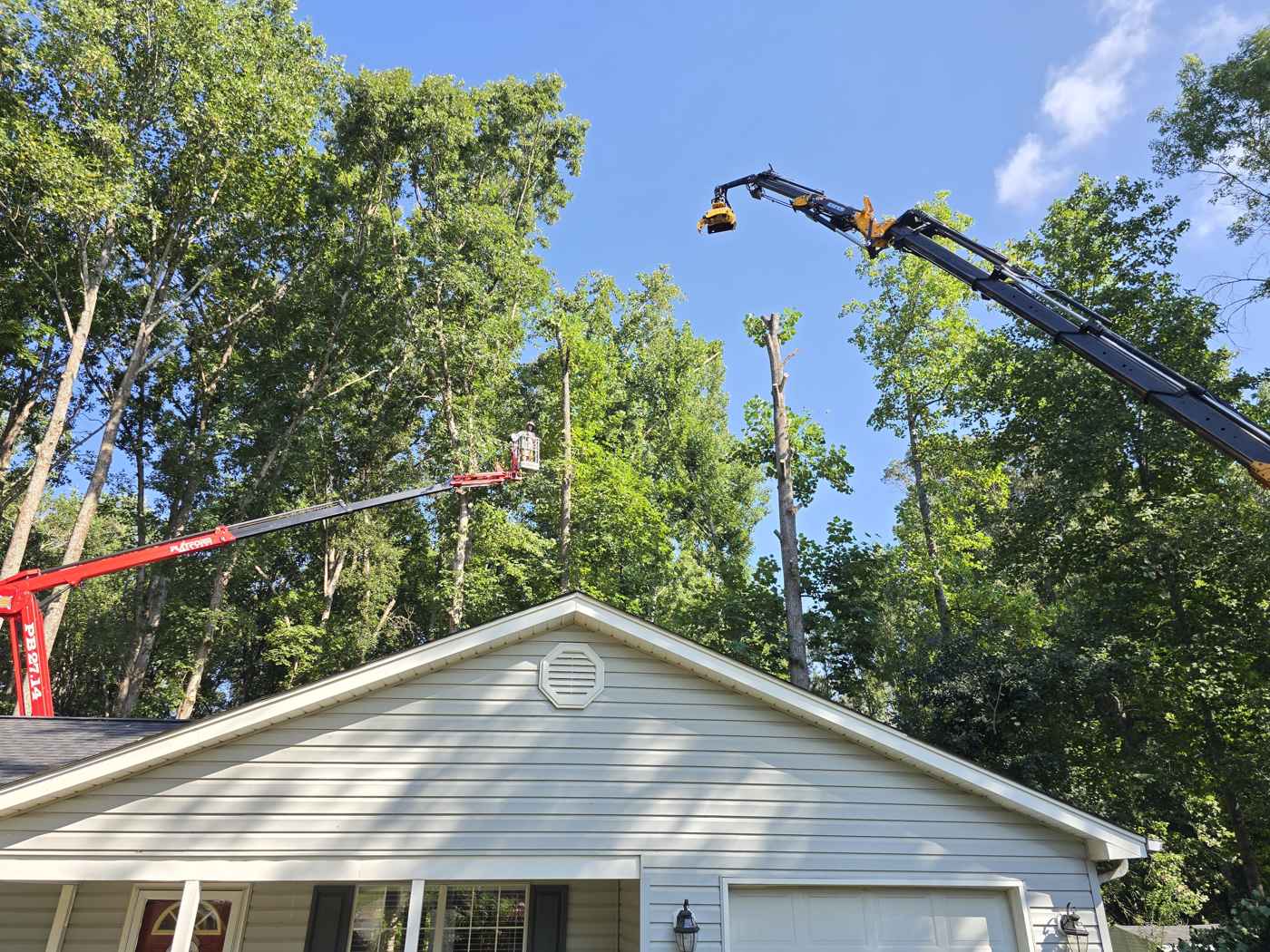
Ask any long-time Upstate homeowner what worries them most about winter weather, and ice, not snow, usually tops the list. A half-inch of ice can add hundreds of pounds of weight to a tree's limbs, and South Carolina's ice storms tend to arrive with little warning. November into December, while trees are dormant but before the season's first ice event, is the window to get ahead of it.
Why ice, specifically, is so damaging here
Unlike snow, which is relatively light and tends to shed off branches, ice bonds directly to bark and limbs and simply stays there, adding weight steadily as the storm continues. Combine that with the Upstate's mix of hardwoods and evergreens, many of which never fully adapted to carry ice loads the way trees do farther north, and it's a recipe for widespread limb failure, which is exactly what drives most winter power outages in the region.
The species most likely to break
Some trees are simply more vulnerable to ice and wind damage because of how their wood and branch structure grow. In Central SC yards, the usual suspects are:
- Bradford (Callery) pear: notoriously weak branch angles; a common cause of dramatic winter storm splits
- Water oak and willow oak: fast-growing with comparatively soft, brittle wood
- Silver maple: fast growth again means weaker wood structure
- River birch: attractive but prone to limb breakage under ice load
- Any tree with included bark (a V-shaped rather than U-shaped branch union) or heavy, unbalanced canopy weight

What actually reduces risk before a storm
The biggest wins come from reducing the amount of weak or excess wood a storm has to work with. Thinning a dense canopy lets wind and ice load pass through rather than catching in the branches like a sail. Removing dead, cracked, or crossing limbs takes away the weak points most likely to fail first. For trees with a genuinely valuable but structurally risky limb (a big oak with a wide, low branch, for instance), cabling or bracing can provide extra support without removing the limb entirely. None of this is a weekend DIY project; it's exactly the kind of assessment a certified arborist is trained to make.
Beyond the trees: yard and home prep
Look up before the first freeze and note any limbs hanging over the roof, driveway, or power line. Those are the ones worth addressing first, since they cause the most damage or the most dangerous outages when they fail. It's also worth knowing who to call before a storm hits rather than during one; emergency tree services get flooded with calls in the hours after an ice event, and having done your homework in advance means a faster response if something does come down.
Frequently asked questions
Which trees are most likely to be damaged in an ice storm in South Carolina?
Bradford pear, water oak, willow oak, silver maple, and river birch are the most common problem trees in Upstate SC yards, mainly because of fast growth, brittle wood, or weak branch angles. Any tree with a V-shaped (rather than U-shaped) branch union is also at higher risk regardless of species.
Can thinning a tree's canopy really reduce storm damage?
Yes. A dense canopy catches more wind and holds more ice weight, similar to a sail. Selective thinning by a professional lets wind and ice pass through more easily and removes the weakest branches before they become a problem.
What is cabling and bracing, and does my tree need it?
Cabling and bracing are support systems (flexible steel cables or rigid rods) installed in a tree's upper canopy to provide extra support for large, structurally weak, or heavy limbs, allowing you to keep a valuable tree rather than removing it. An arborist can tell you during an inspection whether a specific limb is a good candidate.
What should I do if a tree limb comes down on power lines?
Stay away and treat any downed limb near lines as energized, even if it looks harmless. Contact your power company immediately to report it, and don't attempt removal yourself. That's a job for utility crews or professionals trained to work near live lines.
Want a tree looked at before ice season? Estimates are free across Central, Clemson, Seneca and nearby towns within about 30 minutes of Central. If a storm has already brought a tree down, see our storm and emergency tree removal page. Call (864) 508-4100.